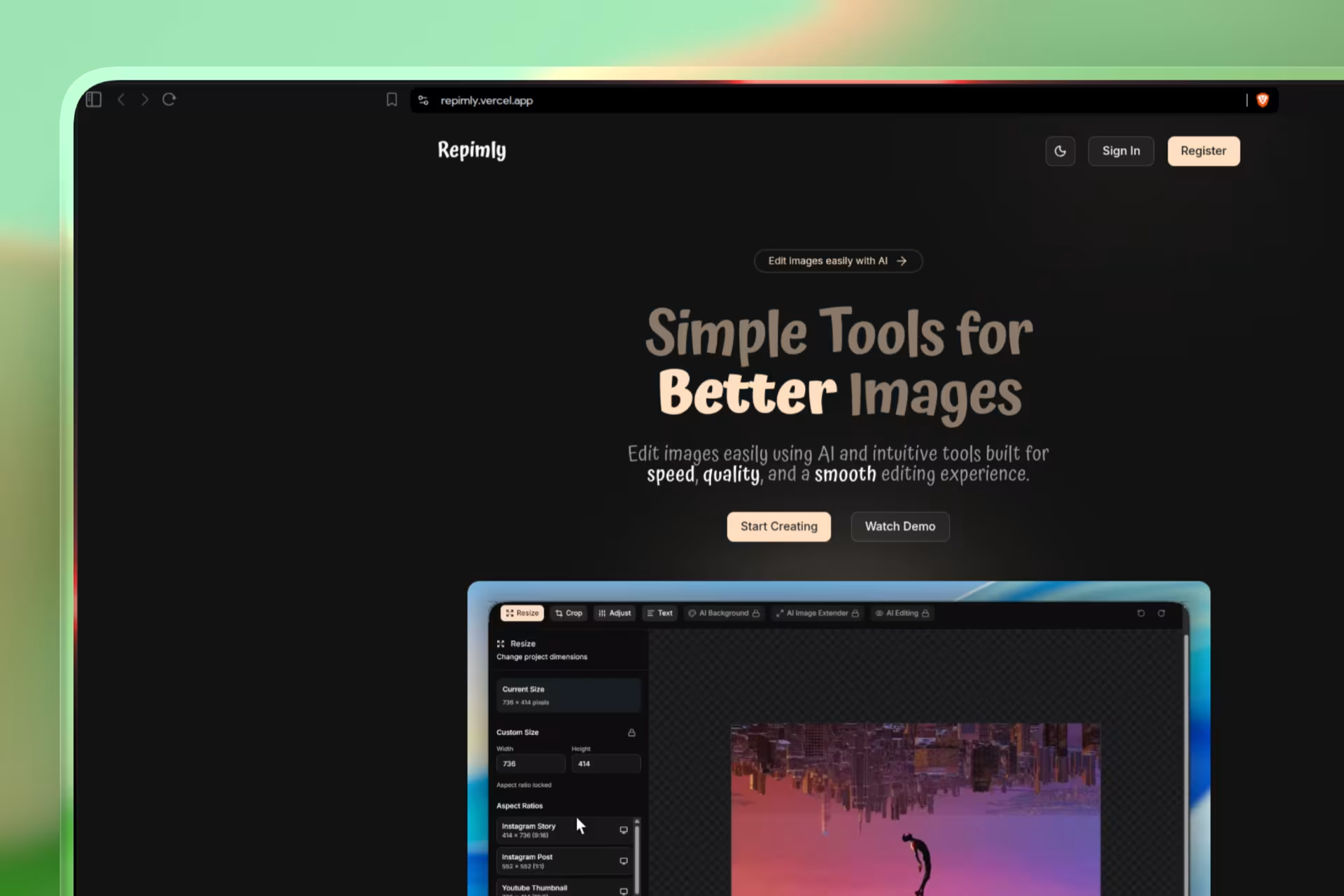
An open-source AI image editor built with Next.js and Convex. Background removal, style transfer, and standard crop/resize/adjust tools in one canvas-based UI.
 Click to zoom
Timeline
Ongoing
Role
Full-Stack Developer
Team
Solo
Status
In DevelopmentTechnology Stack
TypeScript
Next.js
React
TailwindCSS
Key Challenges
- Integrating AI models for image processing
- Building a performant and intuitive user interface
- Managing complex state for image editing tools
Key Learnings
- Advanced TypeScript and Next.js features
- Working with AI APIs for image manipulation
- Optimizing front-end performance for a media-heavy application
Image Editor AI
Image Editor AI is an open-source, AI-powered image editing tool built with Next.js. It provides an interface to apply edits using AI models (background removal, image enhancement, style transfer) along with the standard crop, resize, and color adjustment tools.
This project is my attempt to build a single editor that combines the AI features I actually use with the basic editing tools that AI-only tools always leave out.
What users can do
- Apply AI-powered edits. Use AI models for background removal, image enhancement, and style transfer.
- Manipulate images. Standard image editing tasks: crop, resize, color adjustments.
- Transform images. Apply filters and effects.
- Clean interface. A canvas-based UI that keeps the basic tools within reach.
Key features
- AI-powered editing. Integrates with AI models for image manipulation.
- Rich editing toolset. Basic and advanced image editing in one place.
- Next.js and React. Built with a TypeScript-first stack.
- TypeScript. End-to-end type safety.
- Tailwind CSS. Utility-first CSS for fast UI work.
- Open source. The project is open-source, contributions welcome.
Why I built this
- To explore the intersection of AI and web development.
- To build a practical tool anyone can use.
- To deepen my knowledge of Next.js, TypeScript, and modern frontend technologies.
- To create a foundation for future work in AI-powered applications.
Tech stack
Frontend
- Next.js. React framework for server-rendered and statically generated web apps.
- React. JavaScript library for building user interfaces.
- Tailwind CSS. Utility-first CSS framework for custom designs.
- TypeScript. Typed superset of JavaScript that compiles to plain JavaScript.
Backend and AI
- Next.js API routes. Serverless functions for talking to AI models.
- AI models. Integration with various image processing and generation models.
Development experience
Full-stack development
- Built both the front-end and back-end using Next.js.
- Implemented API routes to handle requests to AI models.
- Managed application state using React hooks and context.
AI integration
- Researched and integrated various AI models for image editing.
- Handled asynchronous communication with AI services.
- Tuned the performance of AI-powered features.
UI and design
- Designed a clean and user-friendly interface with Tailwind CSS.
- Focused on an intuitive and responsive user experience.
- Implemented a component-based architecture for the UI.
Impact and results
- A functional prototype of an AI-powered image editor.
- A well-structured and scalable codebase.
- A useful learning experience in building full-stack AI applications.
Future enhancements
- More AI features. Object detection, image generation.
- User accounts. Save work and create a gallery of edited images.
- Real-time collaboration. Multiple users editing the same image at once.
- Plugin system. Let developers add their own editing tools.
Key learnings
- How to build a full-stack application with Next.js.
- How to integrate AI models into a web application.
- How to design and build a complex user interface.
- The importance of performance and optimization in a media-heavy application.
"You have a right to perform your prescribed duty, but you are not entitled to the fruits of actions."
Bhagavad Gita
Design by SahilCodex
© 2026. Built with hands.